

HELPING PEOPLE IN NEED
Former foster youth thriving in college
Too many of our country’s youth end up in foster care, homeless or without connection to supportive family. Often their lives are chaotic, and the basics many take for granted – food, shelter, parental support – are missing or inconsistent. These experiences may cause far-reaching and compromising social, physical and emotional effects and impact educational attainment. Nationally, less than 5 percent of these young adults earn a college degree.
 With higher-education partners in Arizona and Indiana, the Trust created the Bridging Success and THRIVE programs to find these young people in our communities who have endured tremendous hardship and help them alter the course of their futures through education. Drawing on the successful model of the Nina Scholars program, the Trust worked with Arizona State University and Maricopa County Community Colleges to create the Bridging Success program in 2014, and with Indiana University-Purdue University Indianapolis to build the THRIVE program in 2016. These programs apply an in-depth understanding of foster youths’ unique needs and offer personalized coaching and supportive services to help these students stay in college and earn a degree. Bridging Success and THRIVE instructional teams connect students to academic, social, psychological and financial resources, and provide environments and opportunities that help students grow beyond the limits of their upbringing.
 At ASU and MCCC, the Bridging Success program is demonstrating great success, increasingly identifying and retaining former foster youth on campus. The program’s results have drawn the attention of other Arizona universities and colleges, which are working with Bridging Success program coordinators to build similar programs on their campuses. IUPUI reports that prior to THRIVE’s launch, students at the university who experienced foster care or were disconnected from parental supports had a one-year retention rate of 53 percent, compared with 74 percent for all IUPUI students. Just one year after the program began, the retention rate among THRIVE students climbed to 69 percent, approaching the campus average. Through Bridging Success and THRIVE, students are part of understanding and supportive communities where they are developing and strengthening their personal skills and forging important new connections. They are growing, succeeding and charting a new course for their lives.
Nina Mason Pulliam Legacy Scholars Program
In 2001, the Trust established the Nina Mason Pulliam Legacy Scholars program to open doors of opportunity for men and women seeking college degrees. Nina Scholars are adults with dependents, people who have physical challenges and youth who have been in the foster care system.
Who are the scholars?
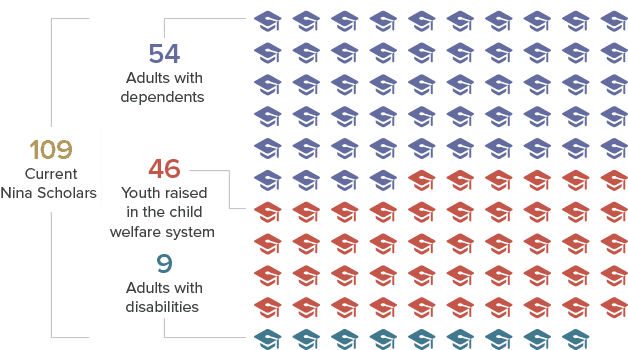
323
Number of Nina Scholars
graduates since 2001
$27 million
Amount invested in Nina Scholars
program since 2001

Scholars graduating or continuing
to progress to a degree dramatically
surpassing the rate of their peers
Our Partners


Rising to self-sufficiency
Homelessness continues to challenge Maricopa and Marion counties in Arizona and Indiana. As community and state leaders work to address the issue, the Trust supports social service organizations in both states that help bring homeless individuals, and those at risk of becoming homeless, to self-sufficiency.
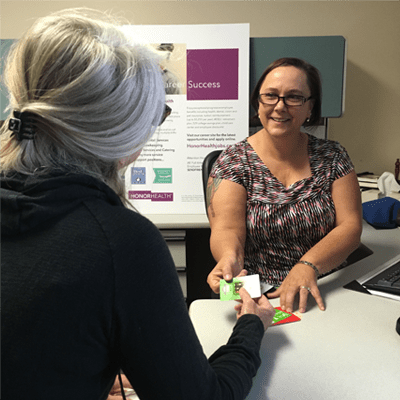

St. Joseph the Worker’s Employment Heals Sunnyslope project in Phoenix is a workforce development model that removes obstacles to employment by providing the support and resources needed for clients to get and keep a job. In addition to pairing homeless and at-risk individuals with area employers, St. Joseph the Worker provides non-traditional support, such as bus passes, professional clothes, work boots, tools and certification fees — required items that can price a client out of accepting a job. Last year, nearly 4,000 Employment Heals clients earned an average starting pay of $11.27 per hour and 42 percent secured jobs offering benefits; and by the six-month mark, at least 70 percent remained employed, putting them and their families on the path to sustained self-sufficiency.
Children’s Museum of Indianapolis’ Mid-North Promise program employs a two-generation approach to poverty, helping both parents and children through personalized educational planning for the entire family. To improve educational outcomes for families in six underserved neighborhoods surrounding the Museum, the Mid-North Promise program offers cradle-to-college educational programming for youth and post-secondary scholarship support for both youth and their parents. The Museum’s family learning navigator helps each family determine the children’s and parents’ needs, from finding a high-quality preschool to assuring older children attend schools that work for them. It also addresses any educational interests and needs for parents to improve their earning potential. Over the past two years, the Museum has distributed $55,000 in renewable scholarships to program participants.