

ENVIRONMENT
Conserving the Verde River
At 595 acres, Park Central Farm is the largest privately owned farm along the banks of Arizona’s Verde River. In 2018, property owners Hauser and Hauser Farms entered into a voluntary conservation easement that will protect streamside forests and wildlife habitat, reduce water use on the farm and assures the land will never be subdivided or developed. This long-term conservation effort is the result of The Nature Conservancy’s sustained work on behalf of the Verde River, the Hauser family’s dedication to water conservation, and the Trust’s $2.5 million investment, along with that of the Arizona Game and Fish Department, Natural Resources Conservation Service and the Conservancy. Park Central Farm will remain a working farm, with the Hauser family employing agricultural best practices to reduce river water consumption and diminish polluting run-off. This successful public-private partnership demonstrates there does not have to be a choice between conservation or sound economics – we can have both.
The Park Central Farm project is one of several Trust Verde River projects launched in 2018 that are cumulatively protecting and restoring more than a 3-mile corridor of the river and retaining or returning more than 350 million gallons of water to the river every year.



Unifying for open space planning
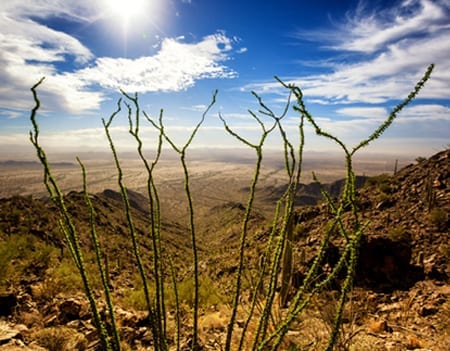
Maricopa County in Arizona is one of the fastest growing counties in the nation, and with growth often comes development that eliminates or permanently alters natural resources and systems. In January 2016, the Central Arizona Conservation Alliance, a project of the Desert Botanical Garden, convened a two-year strategic planning process, involving more than 30 participating organizations and hundreds of meetings, to examine how to align economic growth, natural resources and cultural heritage conservation values.
The result is the Regional Open Space Strategy for Maricopa County, which CAZCA released in 2018. The ROSS is a road map that lays out first steps toward unified, cohesive, regional open space conservation, with strategies that include the social, cultural and environmental values of communities. When fully implemented, the ROSS will deliver an open space network that enhances the unique character of the desert region and enables Maricopa County to realize the full benefits of open space for people, the environment and the economy.
Advancing White River restoration and protection
Indiana’s White River and its watershed provide drinking water to 2 million people and habitat to several thousand plant and animal species. Interest in the waterway, which winds through the center of Indiana and urban Indianapolis, is on the rise; and the Trust’s investment in the White River is driving increased emphasis on waterway protection and water-use planning.
In 2018, the Trust supported the first statewide Indiana Water Summit, which convened national water experts, public and business leaders, community groups and researchers to lay the groundwork for future statewide and regional water planning. The Trust is participating in the White River Vision Plan, a joint effort among Hamilton and Marion counties and numerous municipalities; economic development, tourism, conservation and community organizations and other stakeholders, to develop a community-driven plan to enhance 58 miles of the river. Last year also marked the Partners for the White River’s first full year implementing $4.9 million in collaborative projects the Trust funded in 2017 to protect and restore the river and surrounding habitat. The numerous Indianapolis-area nonprofit organizations comprising the Partners are performing water quality research and monitoring, helping reduce pollution, improving wildlife habitat, and increasing Hoosiers’ access and connection to the waterway.
Hoosiers are embracing the White River – its challenges and its opportunities – with renewed energy making this an opportune time to engage even greater numbers in efforts to restore and protect this critical, life-giving resource.

